Friday, December 18, 2015

NEW RELEASE: LAUREL: BRIDE OF ARKANSAS, AMERICAN MAIL-ORDER BRIDES SERIES


Mail Order Brides is a very popular subject for romance novels these days. If you're a fan and can't find a story to read, then you're not looking very hard. Surprisingly, many readers don't know that mail order brides are grounded in history and fact.


Men on the Western frontier found their success in many different enterprises but lacked the company of a wife and family. With very few to no women in the remote areas of the West the ways to get those women to them was challenging. The best way was to advertise.


Image result for american mail order brides

Either a woman would list herself in a catalog and was selected by a man for marriage or a man would do the reverse. The Brides came from well developed areas in the East to marry and were single, widows, divorcees, or runaways.Women agreed to marry men they didn't know to escape their present life, to gain financial security, or to seek adventure.
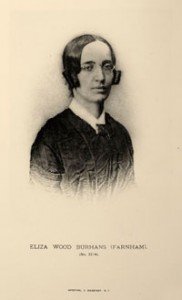


It's interesting to learn that a woman by the name of Eliza Farnham started the Mail Order Bride movement around the time of the California Gold Rush. She was shocked by the way the men lived their lives and horrified by their living conditions. Eliza developed a process to bring women out West for these men. The women applied by way of an application so Eliza could ensure only the best and most lady like applicants would be selected. Sadly, Eliza failed in her attempt as only three women came.


In 1864, Asa Mercer succeeded where Eliza failed. He brought hundreds of women to Seattle and they even paid for the privilege mostly because of the War. The imbalance of the women in the East and South to the men in the West spiked the interest of both genders.


Enter a groundbreaking idea by Kirsten Osbourne, that became a project, and finally publishing history. 50 Brides, 50 States, 50 Days in a row, the American Mail-Order Brides series tells the stories of 50 women all losing their jobs to a tragedy and how they try to make their way in their new world.


This 1500 word prequel is what ties together the ground-breaking American Mail Order Brides books. The project includes fifty mail order bride books, one for each state, which will be released one per day from November 19th, 2015-January 7th, 2016.
Roberta, Manager of a garment factory in Lawrence, Massachusetts, finds a very large discrepancy between the amount of money on hand and the amount her books say she should have on hand. When she calls in the owner to talk to him about it, she knows immediately the discrepancy is caused by him. After the factory burnes to the ground a short time later, she feels responsible for the women who are now jobless. Can she find a solution that won't leave all the women unemployed?


My contribution to this wonderful project is my new release, LAUREL: BRIDE OF ARKANSAS, American Mail-Order Brides, #25


Laurel Weidner desires a life of her own away from Philadelphia society and a dull, boring marriage. She is sent to live with her aunt in Lawrence, Massachusetts. When her Aunt dies in a tornado, she gets a job at the Brown Textile Mill to avoid going back home. Two months later the mill burns down, and her father threatens to bring her back to Philadelphia.

When the mill and her livelihood perish with the fire, she has no other choice but to answer an ad in the Grooms’ Gazette and become a Mail Order Bride. Will she find peace and long lasting love in the arms of a stranger?

Griffin Benning needs a mother for his children. When his wife died, he lost his two children to his in-laws who claimed to have a better environment for raising his children. He misses his family and is coerced into advertising in the Grooms’ Gazette for a wife to raise his children and work the farm in order to get them back.

Will his ad for a Mail Order Bride provide what he needs? Can he find love and happiness with a stranger? Can these two strangers find a common ground to reach their goals along with a happy-ever-after?


Thanks for visiting and Merry Christmas to you all!

Carra


Wednesday, December 16, 2015

Pink Stuff and Christmas

When I was a kid, there was a popular saying: "You're as slow as Christmas."

I understood that to mean someone worked or moved slowly. Back then, it seemed Christmas was excruciatingly slow in arriving each year so the adage made sense.

Not So Much Now

I've stopped saying: "Slow as Christmas." It no longer seems to apply. *LOL* I don't know what happened, it often seems as if I'm sharing black-eye peas on New Year's Day then, bam! Christmas is here again.

My first batch of company arrives this weekend so I'm in full-out chef mode. Of course, my chef mode would probably make Gordon Ramsey cringe because my favorite recipes are family favorites that are easy to do. A perfect example of this is Pink Stuff. My mom and my sister-in-law always make Pink Stuff at Christmas.

Delicious Dessert With Weird Name

Whoever originally created Pink Stuff must have named it that because it's a lovely shade of pink, and it's not a cake, pie, cobbler, or cookie. It's this stuff that's all mixed together then chilled. Another plus: no baking required. It's the easiest dessert recipe I've ever seen, and it's delicious.

Pink Stuff (My Sister-in-Law Judy's Recipe)

1 can (21 1/2 ounces) of Comstock Cherry Pie Filling
1 can (15 1/2 ounces) of pineapple chunks or crushed, chilled and drained
1 can (14 ounces) of sweetened condensed milk (like Eagle brand)
8 ounces of whipped cream or a container of whipped topping, defrosted
1 cup miniature markshmallows

Combine all ingredients in a large bowl and mix well. Refrigerate at least an hour before serving. Be sure and serve yourself some because there won't be any leftovers.

Christmas Romance

With all the time you save by not having to prepare a complicated dessert and bake it, you'll have time to read some of the wonderful Christmas romance novels you've grabbed. So many are free or reduced to only 99cents just like my 2 that are available at all ebook sellers.

LuvU4Ever, a holiday short story romance, is free!

Nobody's Cinderella is reduced to only 99 cents.

LuvU4Ever (Free)

This Christmas, Noelle faces the biggest decision of her life.

LuvU4Ever. That's what was engraved on the gold heart David gave her when he proposed. They've shared 10 years of joy in what she thought was a forever love.

I told you never to call me at home.

Can nine little words destroy her forever love? What will Noelle do? Will she walk away? Or dish out some payback? Or will she choose love?

Available at All Romance Ebooks * Amazon Kindle (Amazon has NOT price matched so it's still showing 99cents there.) * iBooks * Kobo * Nook (Nook has NOT price matched either so it's still showing 99cents.) *  Smashwords and other ebook sellers.

Nobody's Cinderella (only 99cents)

Darcy Benton is the oldest cliche in the world—a woman in love with her boss. Other than that, she's no-nonsense, practical, mature, and sober. She's just the kind of woman Chase Whitaker wants as head of accounting for his company. She's definitely not the kind of woman he wants in his bed.

Enter Darcy's meddling, matchmaking best friend who has a plan to transform Darcy into a hottie designed to attract Chase's interest. All it takes? A couple of little lies...and a wish on a Christmas star. Darcy should have heeded that old advice: be careful what you wish for.

Available at All Romance Ebooks * Amazon Kindle * iBooks * Kobo * Nook * Smashwords and other ebook sellers.

Wishing you all the happiest of Holidays and a glorious New Year!

Post Script

Joan Reeves is a NY Times and USA Today bestselling author of Contemporary Romance. Available as ebooks and audiobooks, her romance novels all have the same underlying theme: “It’s never too late to live happily ever after.” Joan lives her happily ever after with her hero, her husband, in the Lone Star State. Sign up for WordPlay, Joan's email list/newsletter for readers and receive a free book.

Saturday, December 12, 2015

Christmas can be an Adventure by Paty Jager

Most people think of the holidays- Thanksgiving, Christmas, Kwanzaa, Hanukkah, and New Years as a time to connect and make memories with family and friends.

My character, Dr. Isabella Mumphrey, has had a dysfunctional life with Christmas alone in boarding schools or with the housekeeper at her family's home. This year she wants a real Christmas with her new boyfriend, Tino Constantine, a DEA Agent.

Isabella is a female MacGyver/Indiana Jones character. She is an anthropologist specializing in Native American cultures and has recently joined the World Intelligence Agency (WIA) where her parents work.

Isabella and Tino met in the Guatemala Jungle in Secrets of a Mayan Moon. They found their missions intersecting in Secrets of an Aztec Temple. This Christmas story takes place before Isabella meets with her aunt at the Hopi Reservation and becomes entangled in Hopi myths and human slavery in Secrets of a Hopi Blue Star.

 Secrets of a Christmas Box

Isabella’s plans of a wonderful Christmas are thwarted when her 
father hands her a World Intelligence Agency mission. He allows Tino to help her with the mission, so they can be together. As the days hasten to Christmas can she decipher the wooden cube she’s been handed or will her first Christmas with Tino be a bust?


You can pick up this short story for FREE!!

Thursday, December 10, 2015

Holiday Gift Guide for Writers

Writers tend to be like black sheep. Everyone knows a writer: in the family, a friend, a quirky coworker…we’re everywhere. :)
With the holidays around the corner, here’s a simple guide of various gifts that writers would greatly appreciate, including a few items to avoid.

~ Printer paper - Reams of it. Because most writers go through them like water. Or wine. Or chocolate.

~ Ink - See paper.

~ Coffee, or Starbucks gift cards – Most writers could probably use this best in an IV, but unless you’re a doctor and can write a prescription for the needles, best stick with the gift cards or beans.

~ Pens – Something cool, unique, different. Even a different color than the usual blue or black.

~ Coffee mugs - Just like pens. Be unique (and dishwasher safe!)

~ Books – Duh! Bonus points for knowing their favorite genre. But a safe bet would be a gift card to their favorite bookstore.

~ Comfy Clothes – Bonus points for writing related shirts/sweaters, such as “I’m the PsycHOTic
Writer Everyone Warned You About,” or “Grammar Snob,” or a personal favorite “Don’t Piss Me Off, Or I’ll Kill You In My Novel.”

~ Subscription to Writer’s Digest or Writer’s Journal – precious jewels in the mailbox, that many budget-conscious writers are forced to consider luxuries.

~ Massage or Spa Day gift card – This forces us out of the house to relax our writing muscles.

Don’t Bother With These:

X Thesaurus – Every writer already has one, and every good writer knows not to use it.

X Digital Voice Recorder – Every phone has something already on it that works. My phone came with 3 different apps.

X Journals – Unless specifically requested, stay away from these! Every writer has a billion of these shoved somewhere in drawers. Plus, it’s a cliché. Writers are supposed to hate clichés.

Hopefully, this list gives you some ideas and starts you off in the right direction. Have a fantastic holiday!


Susan Sheehey writes contemporary romance, romantic suspense, and women’s fiction. Follow Susan at http://www.SusanSheehey.com, or on Facebook, Twitter, GoodReads, and Amazon. Be sure to check out her upcoming release, Jewel of Solana!

Sunday, December 6, 2015

My Life....in Shambles!

Is it the 6th again already? Happy December. 

Ah let’s see… what has been going on? Well, my book was released (yay)… and then the cover was mocked on a snarky blog I follow… sooooo that happened.
What can ya do?

Last month I finished writing a slightly short erotic novel for a friend’s publishing company. Keep your fingers crossed. It took me a wee bit out of my element.


Last month was also NaNoWiMo… and did I meet my goal? NO! Why? Because I now eight people in my house instead of four and I’m realizing with school age children there are a lot more responsibilities and obligations.

What do I have? I have 5 boys all school at various ages.

Two are in 5th grade (ages 10 and 11), two are in 7th grade (ages 13 and 12) but at 2 different schools and then one is 15 and in 9th grade at the high school. Then there’s my 19 year old daughter and of course my husband.
If I’m not cooking dinner, I am cleaning something. Baking, studying and quizzing, oh my! I missed two deadlines trying to help one kiddo by reading his books along side of him and then quizzing him. We’re realizing the problem lies deeper than reading comprehension. What’s that saying…


All this family drama makes me understand why/how these family saga books are so successful.


 Reading? Writing?
I hope once again to have more to report next year!


In the meantime


XOXO


Friday, December 4, 2015

Christmas in the Old West #NewRelease @JacquieRogers #HeartsOfOwyhee


by Jacquie Rogers

The snow blows nearly sideways as it blankets the range. Ranch hands hunker down in their saddles, scarves over their ears and their Stetsons protecting them from the fierce wind. They dream of a warm fire and hot buttered rum. But they have livestock to save from freezing and starvation, so they ride on.

Yes, I know these
cattle are a modern
breed and very fat
That was Christmas on the rugged open range. Miserable for man and beast. But it wasn't just another day at the office, so to speak. They whittled gifts for one another, sang a few carols as they sat around the campfire warming their hands and feet. Cook had given them a hot meal--the finest beans with maybe some meat thrown in. And with a little luck, Cook would've baked an apple pie. Life couldn't be better and they thanked their lucky stars for a sound horse and solid tack.


Christmas on the farm

Everyone has chores to do every day, then and now. Whether holiday or not, farmers have to milk the cows, feed and water the livestock, gather the eggs, and tidy the barnyard (to use a polite term), making such repairs as required. 

So after the chores were done, the family could then gather together and celebrate Christmas with what meager resources they had. If they didn't have evergreen trees to spare, they might decorate a sagebrush with popcorn and berries. They made ornaments with precious bits of paper and scraps of cloth. Peach tins made nice ornaments, too, and they shine in the firelight.

1876 Christmas, Harper's Weekly

Their celebration might be more humble than those in the eastern cities, but they had a grand time, nevertheless. The women cooked for days. They were resourceful and whatever they had available would do for a fine pie or stew. The Christmas feast could consist of chicken, venison, or maybe a ham, along with homemade rolls, freshly churned butter, potatoes and gravy, and pies--maybe one made with dried apples, and a vinegar pie. 

Each family member made modest gifts for the others and even the smallest child labored over precious gifts--maybe a drawing or a doll made of sticks. They sang carols, maybe read the Bible, and if they were close enough to town, maybe even went to church.

For most Christian families, Christmas was a day for family togetherness and to show their love and appreciation for one another, as well as celebrating the religious aspect of the holy day.

Christmas for Outlaws, Gunslingers, and Cyprians

The saloon owner brought small gifts for the working ladies, the bartender, the resident gambler, and a few of the regulars. A few cowpunchers bestowed gifts upon their favorite girls. They might have had a nice meal together before the saloon (or brothel) opened for business, and even then, the customers were few. It's one night they could relax.

Bringing Fact Into Fiction

When I was researching for my Hearts of Owyhee series, I ran across this item from the December 21, 1872 issue of The Owyhee Avalanche (the oldest newspaper in Idaho, still operating out of my hometown, Homedale, Idaho):

THE CHRISTMAS TREE. The Christmas Tree Festival will be held in Jones & Bonney’s Hall. We will stake in addition to what was said in our last issue, that the Brass Band, composed at present of Messrs. Charles Leonard, Joe Gross, Benj. Davis, Rufus King, Ferd. W. Frost and E. Douglas, will perform some of their best pieces, which will add greatly to the pleasure of the occasion.
     The singing, accompanied by the organ, will be done principally by young girls who have learned all the music they know in Silver City, and who by virtue of talent, industry and a good teaching have acquired, in our judgment, wonderful proficiency in the beautiful art over which the Muses preside. They are our little folks, and not imported singers, which will make it all the more interesting; that they will do their part in first-class style for their ages, we have not the least doubt, in fact, we know they will.
     The tree will be a prolific one no doubt. The Argosy of Santa Claus, St. Nicholas, & Co. arrived at the port of San Francisco four days ago, as we are informed per telegram, and a large cargo of its merchandise is on its way up here, and will not fail to arrive in time. ~~

I could just see the hustle and bustle of Silver City.  

Brass bands were wildly popular all over the West then.  Yes, they decorated and put up Christmas trees.  They had dances and concerts.  And Santa was on his way! 

So why not have a Secret Christmas Angel event for all the single men and women in town?  Seems like something they'd do.  And that's what How the Texan Stole Christmas (a Hearts of Owyhee single read) is all about.  Here's the blurb:

Winnifred Spangler has thrown herself into community work to ward off the pangs of her lonely heart. Fairview, Idaho Territory, is snowed in—and cabin fever has set in with a vengeance. Winnie organizes a gift exchange for the town’s single young adults. Her hope is that a few of them will find the loves of their lives.

Judd Shaw, a Texas cowhand, hates the ice and cold. As soon as the roads are passable, he’s headed back to Texas. But thanks to his childhood friend, he’s caught up in the Secret Christmas Angel game, and the name he draws is the prettiest widow in all of Idaho—Winnie.

Can Winnie’s smile melt his hardened Texas heart?

How the Texan Stole Christmas
a Hearts of Owyhee single read

Want to win a free book?  
Tell me about your favorite holiday tradition--any holiday!  
Winner will be picked at random Dec. 6, 2015, at 8pm Pacific Time.  
Be sure to include your email address with your comment!

Wednesday, December 2, 2015

WHAT WOULD YOU HAVE EATEN FOR CHRISTMAS IN MEDIEVAL TIMES?

By Caroline Clemmons

I hope you will find this article as fascinating as I have. Although I also write contemporary, most of my books are historical set in the nineteenth century. I love history, and enjoy information like that presented in the article below. With all the rushing to and fro and planning we do, at least we have modern ranges and ovens, refrigerators, and large supermarkets for buying groceries. Even those with modest income are able to prepare a more eleborate meal occasionally for special days. 

I don't believe I'd have done very well cooking elaborate dishes in a fireplace. Euwww! to serving peacock with the feathers re-applied. The following article is used with permission.

May you each have a wonderful Christmas filled with love! 


BIona McCleeryUniversity of Leeds, England 

With Christmas almost upon us, there will be plenty of frenzied present shopping and meal planning. Haven’t made that Christmas cake yet? Fear not. If you were preparing the festive meal 600 years ago you’d have far more on your plate.

The picture below is a calendar page from a Book of Hours, a type of prayer book popular among pious rich people in the Middle Ages. Apart from the costumes they are wearing, the people at the bottom of the page seem much like us – keeping warm and enjoying their food and drink.


The 12th day of Christmas. Courtesy of the Brotherton Library, University of Leeds., Author provided

It may surprise you to learn that this particular calendar month is January. The feast day celebrated by the couple is Epiphany on January 6, picked out in red (Epyphania). Our Christmases, hectic though they may be, are actually a doddle compared to the traditions of old. Medieval people celebrated all 12 days of Christmas, from December 25 through to Epiphany – the day the three kings turned up with gifts for the newborn Jesus – although they did not usually feast every day. Some households had their big feast on Christmas Day. For others it was the first of January or the 6th, depending on local custom.

Wealthy or poor


There’s not much detail as to what the couple ate at their winter feast. The artist was more interested in depicting the strawberries and flowers in the margins than in putting food on the table. This is typical of medieval manuscript art. Even elaborate descriptions of royal feasts say little about food. We know even less about what the poor ate, although lords probably feasted their tenants at least once over Christmas.

We do know that preparations for winter would have begun in the late autumn. Humans and animals both ate the same basic foodstuff: grain. Poorer people did not have enough grain for animals over winter so most pigs and cattle were fattened up on acorns and slaughtered. Calendars commemorate this strategic act for the months of November and December as in the images below, paired with the relevant signs of the zodiac (Sagittarius and Capricorn).


Fattening in November and slaughtering in December. Courtesy of the Brotherton Library, University of Leeds

Of course, the wealthy could continue to keep their animals alive, so they had fresh meat all winter. It’s not true that they used spices to liven up rotten meat: cloves, nutmeg, cinnamon and pepper were imported from India or Indonesia, so if you could afford them you could afford good meat. The rich could also afford sugar – candied fruit, sugared almonds and sweets have always been popular Christmas treats.

The poor would have eaten sausage and bacon instead, salted fish if they could get it, stored or dried apples, peas and beans, perhaps a bit of honey, and would only have had the added flavours of onion, leeks and garlic. Even salt was expensive. The hungriest time was actually not the months that we associate with winter cold, but the months of April and May. It was then that stores had run out and there would be little growing yet in the garden. Nor was there much dairy as hens naturally lay less in winter and cows don’t produce milk until after they have their spring calves.

Yuletide feasting


The best way to find out what the wealthy ate is to turn to their financial accounts and cookery books. Cookery books such as the Forme of Cury, written for the household of King Richard II (1377-1399), provide some tasty recipes. For a recent project we made recipes from this text and others for the public to try at festivals and markets around Yorkshire. In Castleford Market in December 2012 we prepared seasonal tastes such as gingerbread, mutton stew (mounchelet) and apple pudding (pommesmoile).


An opulent Christmas feast. Courtesy of the Brotherton Library, University of Leeds

But it was nigh on impossible to prepare the main dishes that the rich had at their feasts. Turkey originally came from the Americas so was not found on English tables until the late 16th century. It probably replaced a showier but much less tasty bird: the peacock. The price of these birds meant that most people had to be content with another large expensive bird, the goose, which was a traditional Christmas main course until relatively recently. Also closely associated with Christmas was the wild boar – a boar’s head was often brought into the hall to accompanying carols. But it wasn’t always intended for eating.

And then elaborate displays of prepared meat, sugar or wax in the form of fantasy animals, angels and castles were often part of the entertainment, sometimes even moving mechanically or exploding.
So count yourself lucky as somebody who won’t go hungry this winter. You may have left the pudding quite late but you can leave the peacock and pommesmoile for next year.

Iona McCleery, Lecturer in Medieval History, University of Leeds
This article was originally published on The Conversation. Read the original article.