Showing posts with label herbal lore. Show all posts

Saturday, August 28, 2021

For the Love of Lavender

 “The air was fragrant with a thousand aromatic herbs, with fields of lavender, and with the brightest roses blushing in tufts all over the meadows.” ~ William C. Bryant

(lavender in our garden)

I'm happy to report success with lavender these past few years and I've been encouraged to plant more varieties. Phenomenal, which has lived up to its name, is an outstanding introduction in the lavender world. The shorter Munstead variety has proven reliable, and an even smaller one called Lavance Purple has made it through the spring and summer. The true test awaits it. My thoughts as to why lavender has survived the past two winters here with its tendency to freeze and rot is because I planted it along my rock border, a low wall I'm building by adding every rock I find. The stones absorb the sun's heat and give the plants some warmth and shelter from icy winds. I also mixed small stones into the planting hole for better drainage. Fingers crossed for this coming season.

If asked to choose my favorite herb, lavender would be at the top. The scent is wonderful, transporting even, and has a calming effect. Some enthusiasts take lavender internally, but I have not done this. I'm probably missing out. I've also used lavender oil to heal cuts and skin ailments. The oil helps ward off biting insects and mosquitoes.


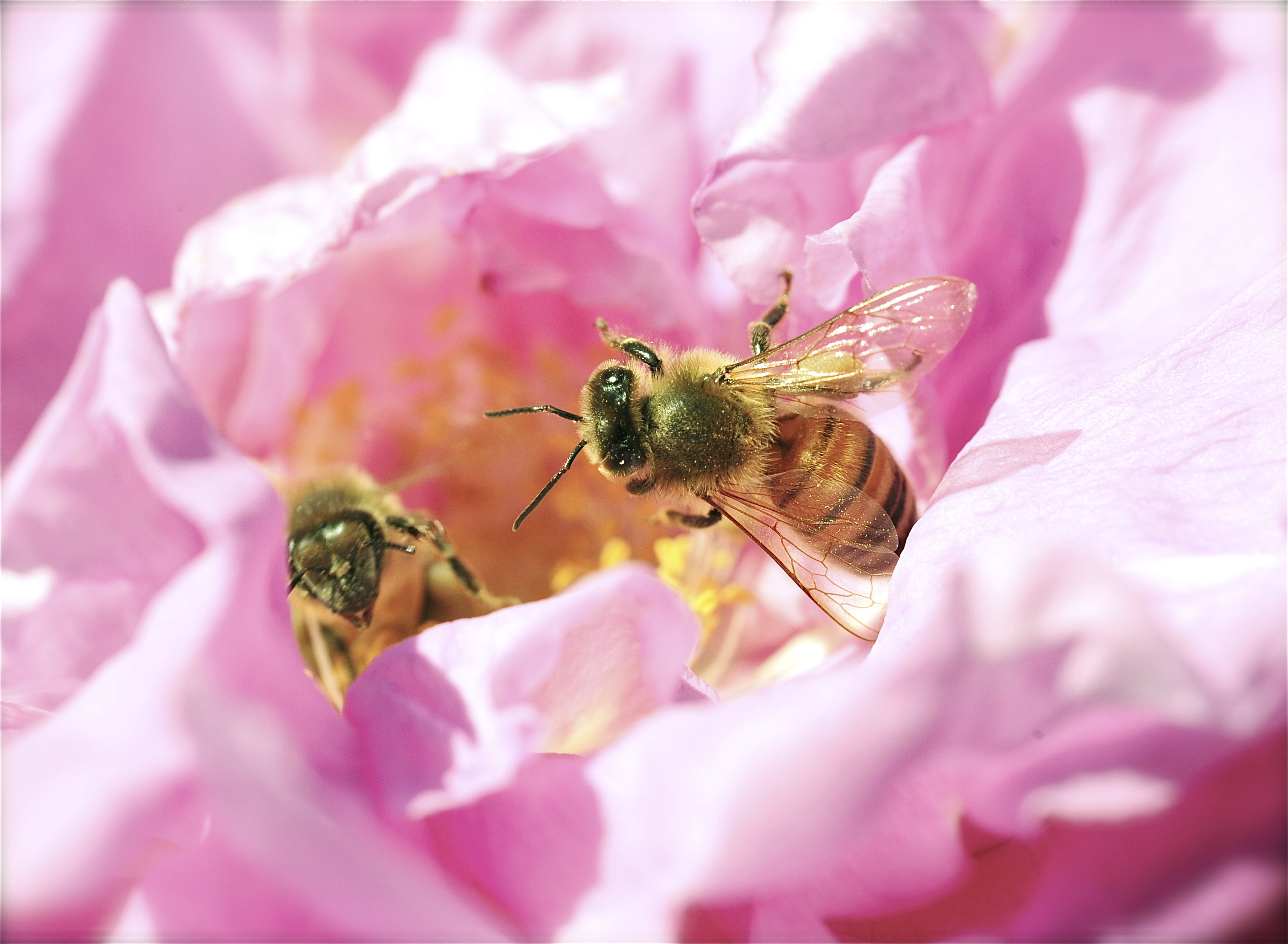
(bees visiting our lavender)

Lavender is a perfect companion plant for roses and beloved by bees and butterflies. When I envision old English gardens, lavender comes to mind, but this antiquated herb goes much farther back to ancient Egypt, Rome, and Greece. It's a biblical herb. There is a heated debate as to which plant is meant by 'lavender' in early references. A costly oil made from the rhizomes of Spikenard, a plant native to the Himalayas, is called both spikenard and nard and sometimes confused with lavender. That is believed to be the perfume Mary Magdalene poured on Christ's feet, unless it was made from true lavender or 'nard' as the Greeks called it. And then there's an aromatic herb called spike lavender, related to lavender, also used by the ancients that enters into the debate. 


I'm not sure we can know for certain which plant is meant unless we go back in time. It's also unclear exactly when lavender arrived in England as the herb we know, but it seems to have been in common use by the sixteenth century. Some monasteries grew lavender much earlier, as monks were the keepers of herbs and the knowledge of their uses during the dark ages. Bless them. It's not worth a knock down drag out fight over lavenders arrival in England. As a local country woman once said of her toddler's moods, it's all 'right mixy.' So if you used lavender in an English historical and have gotten some flack over it, don't worry about it. You can justify its use well back if need be. Lavender is a fascinating herb with an amazing legacy stretching back into the mists of time.

I grow lavender, enjoy its beauty and fragrance, and use the lovely oils. I also use it in sachets, but you can do more. Let me know if you do.



Friday, August 28, 2020

Roses Roses

If you follow me on Facebook, or anywhere else, you will know that I love roses. I am sharing a rose post from the past and hope you enjoy it.

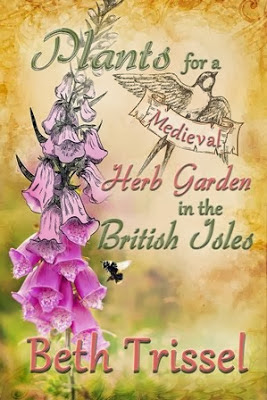
Excerpt from my herbal, Plants for a Medieval Herb Garden in the British Isles,

rosebud
(Old fashioned rosebud)
The English Tudor Rose is the heraldic floral emblem of England. The red rose was the badge of the House of Lancaster during the English War of the Roses. The badge for the House of York was the white rose. When Henry V11 took the crown of England from Richard 111 in battle, 1485, he ended that particular war. He introduced the Tudor rose, combining a red rose, representing the House of Lancaster, and a white rose, representing the House of York, as a symbol of unity after the English civil wars of the 15th century which later came to be called the Wars of the Roses.
The exact species of the Lancaster’s Red Rose is uncertain, but it’s thought to be Rosa gallica officinalis, also known as the Apothecary’s Rose, possibly the first cultivated rose. We used to have this ancient variety, but it finally succumbed to a hard winter and needs to be replaced.
Galica Rose
Rosa gallica officinalis
“My wild Irish Rose,
The sweetest flow'r that grows.” ~Chauncey Olcott
I have an old-time rosebud salve that I love made by the American based Rosebud Perfume Company, founded in 1895 by George F. Smith. They still carry the original salve but have expanded their product line; all are gluten-free, a plus for those of us who are severely intolerant.
Roses have an ancient history. The first cultivated rose likely originated in Persia and spread out from there. The part used is the flower, although the hips are also employed in tea, jam, jellies, syrups... The hips are high in vitamin C and antioxidants. Some varieties of roses produce better hips for this use than others. Rosa canina, commonly known as the dog rose, is one that does.
Back to the flowers. The most favored rose for medicinal use is the above mentioned dark red rose, R. gallica, also known as the Provins Rose and the Apothecary’s Rose. Only flower-buds just about to open are collected, and the lighter colored lower portion is cut off from the deep red upper part. For making a confection, they are used in the fresh state. For an infusion, the flowers are thoroughly dried first and stored out of humidity.
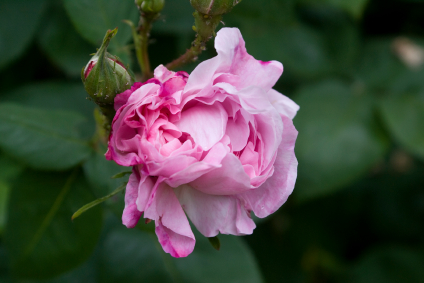
Abraham Darby Rose by David Austen
(Abraham Darby Rose from my garden. A David Austin rose.)
The old pink cabbage rose is used for making rose water by distilling the fresh petals. A soothing ointment of rose water (cold cream) is also made by blending melted wax and almond oil with rose-water and rose oil.
Culpepper gives many uses for red, white, and damask rose cordials and conserves in the treatment of internal maladies including fever, jaundice, joint aches, weakness of the heart and stomach, fainting, an aid to digestion and fighting infection, comforting the heart and strengthening the spirit. Rose ointment is recommended for most any skin condition.
In his 18th century Family Herbal, John Hill gives a recipe for Honey of Roses that sounds delightful. He specifies using red roses. And I doubt he means modern cultivars, but old.
Honey of Roses Recipe: “Cut the white heels from some red rose buds, and lay them to dry in a place where there is a draught of air; when they are dried, put half a pound of them into a stone jar, and pour on them three pints of boiling water; stir them well, and let them stand twelve hours; then press off the liquor (liquid) and when it has settled, add to it five pounds of honey; boil it well, and when it is of the consistence of thick syrup, put it by for use. It is good against mouth sores, and on many other occasions.” (Which means it has many other uses.)

(More David Austin Roses from the garden).


Nonfiction Herbal
Nonfiction Herbal
Plants for a Medieval Herb Garden in the British Isles available in kindle and print at Amazon.
An illustrated collection of plants that could have been grown in a Medieval Herb or Physic Garden in the British Isles. The major focus of this work is England and Scotland, but also touches on Ireland and Wales. Information is given as to the historic medicinal uses of these plants and the rich lore surrounding them.
Journey back to the days when herbs figured into every facet of life, offering relief from the ills of this realm and protection from evil in all its guises.~
“It was June, and the world smelled of roses. The sunshine was like powdered gold over the grassy hillside.” ― Maud Hart Lovelace, Betsy-Tacy and Tib

186025443

Wednesday, March 28, 2018

April Online #Herbal Lore Class with Beth Trissel

If you missed my other classes, or want to catch the updated version, I'm giving my Herbal Lore and the Historic Medicinal Uses of Herbs class in April for Charter Oak Romance Writers. Non-members are welcome to join in. Register at this link. Scroll down: http://charteroakromancewriters.com/on-line-classes-2018
(Dill and heirloom poppies from Monticello growing in our garden)
This workshop spans centuries of herbs and their lore from the ancients, through the British Isles, Colonial America, Native Americans, the Granny Women and the Mountain People of the Blue Ridge and Alleghenies (general Appalachia).

Mountains surround us here in the Shenandoah Valley. This area is rich in history, plants, and people who went to great lengths to thwart witches. Seriously. And, of course, this fear of witches was widespread in Europe and the UK.

Folk were fearful of evil in general, and getting elf-shot... We've got herbs for everything.

There's so much fascinating stuff to cover in this class. Too much, so I encourage participants to download and save the files for later. I also welcome discussion and questions. It's more enjoyable with participation. Otherwise, I feel like I'm talking amongst my selves.

My aim is for this sharing time together to be fun and informative. I often incorporate herbs into my writing and into my life. Some of the more archaic herbal uses are frowned upon today, and/or illegal. I recommend avoiding those.
This is my class outline, but I guarantee I will post even more than this. I have a wealth of information to share, and am accumulating more all the time.
Week One:

Introduction to the workshop and meet and greet.

The wisdom of Native Americans. A focus on Native American herbs.
The Granny Women. A focus on the mountain people and old time cures, both herbal and some white magic.


Week Two:
Colonial American herbs (Part One)

Colonial American herbs (Part Two)


Week Three:
Plants for a Medieval Herb Garden in the British Isles.

***Class members will receive the eBook of my herbal, Plants for a Medieval Herb Garden in the British Isles. Also available in print at Amazon: https://www.amazon.com/Plants-Medieval-Garden-British-Isles/dp/1496111494/ 

Other related posts on herbs in the British Isles, including the Druids.


Week Four:

‘What can kill can cure’ but definitely kill and watch out for werewolves (Poisonous herbs and those believed to have power against werewolves and vampires)

For protection from spells and enchantment, the sacred, healing herbs
Knock yourself out and Ward off the Plague: Dwale, an Old-English Antiseptic

The Vinegar of the Four Thieves
An opportunity for final sharing from participants, wiping away fond tears, and virtual hugs. 


“As Rosemary is to the Spirit, so Lavender is to the Soul."
– Anonymous
Follow my Amazon Author Page at: https://www.amazon.com/Beth-Trissel/e/B002BLLAJ6/


Thursday, December 28, 2017

'Tis the Season for Rosemary

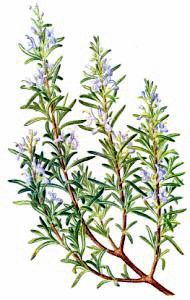
Rosemary is one of my favorite herbs, mostly just because. I rarely cook with it, but I love its scent and the wealth of history behind it. The fragrance is said to stimulate memory so I sniff it frequently and carry  sprigs with me. I have a potted plant growing in my sun space that I've kept going for several years. It stays outdoors in summer (pictured), but our Shenandoah Valley winters are too cold for it to survive. I added a trailing variety this year that is abloom with tiny blue flowers out in my sunspace. Very cheery.

Rosemary, known as the herb of remembrance from the time of ancient Greece, appears in that immoral verse by Shakespeare. My fascination with herbs plays a role in many of my stories, particularly my ghostly murder mystery romance novel Somewhere My Love, as does Hamlet, for that matter. I always wanted to write a murder mystery with a focus on herbs and parallels to a Shakespearean play, and so I did. My new paranormal time travel romance, Somewhere My Lady, with flavors of Somewhere My Love, was released this summer. Somewhere My Lady is book one in my Somewhere in Time series.
A Modern Herbal by Maud Grieve is a wonderful source of herbal lore as well as practical information on the medicinal uses and growing requirements for a host of plants. I have volumes one and two of Ms. Grieve’s work and can easily lose myself in their pages. She refers to her herbal as modern, and in comparison to the ancient herbalists it is, but A Modern Herbal is charmingly quaint and published in the early 20th century.
Regarding Rosemary, she says,
The Ancients were well acquainted with the shrub, which had a reputation for strengthening the memory. On this account it became the emblem of fidelity for lovers. It holds a special position among herbs from the symbolism attached to it. Not only was it used at weddings, but also at funerals, for decking churches and banqueting halls at festivals, as incense in religious ceremonies, and in magical spells.
At weddings, it was entwined in the wreath worn by the bride, being first dipped into scented water. Anne of Cleves (fourth wife of Henry the Eighth and one of two who outlived him) wore such a wreath at her wedding. A Rosemary branch, richly gilded and tied with silken ribands of all colours, was also presented to wedding guests, as a symbol of love and loyalty. Together with an orange stuck with cloves it was given as a New Year‘s gift…
In early times, Rosemary was freely cultivated in kitchen gardens and came to represent the dominant influence of the house mistress ‘Where Rosemary flourished, the woman ruled.’
The Treasury of Botany says:
‘There is a vulgar belief in Gloucestershire and other counties, that Rosemary will not grow well unless where the mistress is “master”; and so touchy are some of the lords of creation upon this point, that we have more than once had reason to suspect them of privately injuring a growing rosemary in order to destroy this evidence of their want of authority.’ (Meanie heads.)
Rosemary was one of the cordial herbs used to flavour ale and wine. It was also used in Christmas decoration.
“Down with the rosemary and so,
Down with the baies and mistletoe,
Down with the holly, ivie all
Wherewith ye deck the Christmas Hall.”—HERRICK.
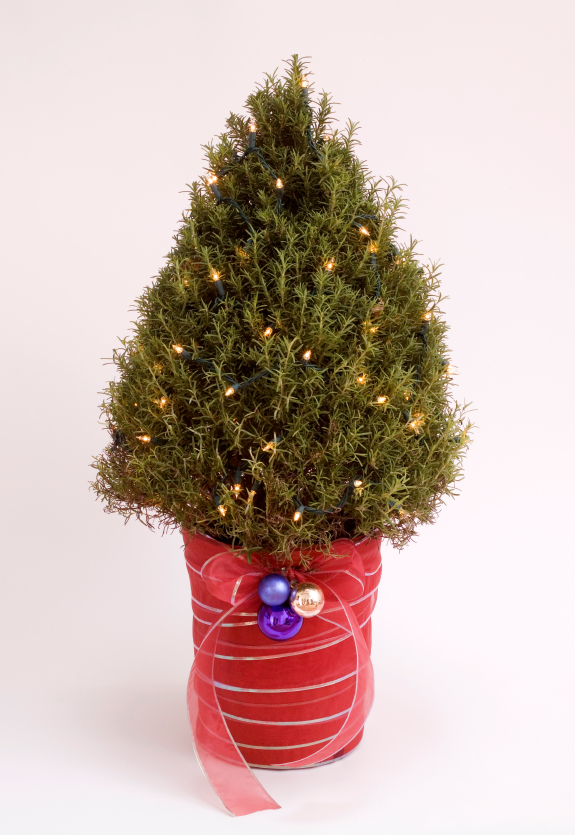
Rosemary Christmas TreeRosemary Christmas Trees
Although an herb, rosemary is often shaped into lovely miniature Christmas trees. The plant is well suited for this purpose as its essential oils produce a scent similar to pine trees and it has a natural evergreen shape and needle-like leaves.
If you purchase a rosemary plant whether as a Christmas tree or for your indoor herb garden, remember it needs good light and moderate watering. Allow the soil to dry before re-watering to avoid root rot. The most common cause of death for potted rosemary is over watering. In spring transfer your rosemary to a clay pot. The clay will help wick excess water out of the soil. Fertilize monthly to maintain health. To this advice I add that you can also kill them by allowing the plant to dry out, so don’t do that either.
Because rosemary is native to the hot, dry hills of the Mediterranean, growing it indoors can be a problem. You may find you get more dense vigorous growth if it is kept outside during most of the year. Trim the plant periodically to preserve the Christmas tree shape. 


Blurb:

Is he real or is he a ghost?


Lorna Randolph is hired for the summer at Harrison Hall in Virginia, where Revolutionary-War reenactors provide guided tours of the elegant old home. She doesn't expect to receive a note and a kiss from a handsome young man who then vanishes into mist.

Harrison Hall itself has plans for Lorna - and for Hart Harrison, her momentary suitor and its 18th century heir. Past and present are bound by pledges of love, and modern science melds with old skills and history as Harrison Hall takes Lorna and Hart through time in a race to solve a mystery and save Hart's life before the Midsummer Ball.


"Somewhere My Lady is a fun supernatural romance that will have you slipping in and out of the past and future as if you were a spirit yourself.'' ~Colleen Chesbro at Colleen's Book Reviews

"Quite simply, one of the best paranormal, time slip stories I've ever had the pleasure to read." ~Elaine at Splashes Into Books

Friday, April 28, 2017

Herbs for Romance and Love Charms

Through the ages, herbs have furthered affairs of the heart. I've provided snippets of historical lore on some of the most significant.
Calendula: One favorite bit of lore is that calendula flowers were used to keep a lover faithful. All one had to do was to dig up some soil where their lover had walked, and use that soil for planting calendulas. From that day forward the lover would forever by faithful. Calendulas are the original English/Scottish Marigold. Though not native, they are widely naturalized from Europe and have been grown in the UK for centuries.
Rosemary: English folklore says if a girl places a plate of flour beneath a rosemary bush on midsummer's eve, she will find her future husband's initials written in it. Another bit of lore to discover your true love is to place a sprig of rosemary under your pillow. A dream will reveal their identity. Dried rosemary was laid in bed linen to ensure faithfulness and a bride who gave her groom a sprig of rosemary to hold on their wedding night would ensure his faithfulness.
Another belief regarding dreams: On Saint Agnes’ Eve (January 20), a woman seeking romance would mix thyme with rosemary and pray: “Saint Agnes, that’s to lovers kind, Come, ease the trouble of my mind.” The virgin martyred saint would then send a dream about her true love.
Rosemary came to Britain with the Romans and has centuries old use.
Violets: Gaelic advice: “Anoint thy face with goat’s milk in which violets have been infused, and there is not a young prince on earth who would not be charmed with thy beauty.”
Violets are used in love spells and may be carried as an amulet to increase one’s luck in love. Combine them with lavender for enhanced effect.
Violets grow throughout the UK. But Lavender wasn’t cultivated there until the mid-sixteenth century. No herb smells more wonderful than lavender. I just planted more in the garden.
Wild Pansy (violas): Violas, heartsease, V. tricolor…have a great reputation as a love charm. Its three colors of purple, white, and yellow, each marked with a petal, have given it associations with the Holy Trinity, and the name Herb Trinitas, which figures in old books. The name pansy comes from the French pensée (thought). 'Love in Idleness' is another of this beloved flower’s names. In ancient days the plant was much used for its potency in love charms, hence perhaps its name of Heartsease. It is this flower that plays such an important part as a love charm in Midsummer Night's Dream.
The pansy Shakespeare refers to are probably V. tricolor, the wild pansy or viola. ‘In A Midsummer Night's Dream. Oberon sends Puck to gather "a little western flower" that maidens call "love-in-idleness". Oberon's account is that he diverted an arrow from Cupid's bow aimed at "a fair vestal, throned by the west" (supposedly Queen Elizabeth I) to fall upon the plant "before milk-white, now purple with love's wound". The "imperial vot'ress" passes on "fancy-free", destined never to fall in love. The juice of the heartsease now, claims Oberon, "on sleeping eyelids laid, Will make or man or woman madly dote upon the next live creature that it sees." Equipped with such powers, Oberon and Puck control the fates of various characters in the play to provide Shakespeare's essential dramatic and comic structure for the play.’
The wild violas, heartsease, grow abundantly throughout Britain.
Vervain: An ancient cure-all, sacred to the Druids, vervain was also thought to be a love charm. According to the Druids, the plant should be collected when neither the sun nor the moon is in the sky. And in exchange for removing such a valuable plant from the earth, honey combs should be left on the ground. It grows wild in England, sparsely in Scotland. However, vervain was grown in herb gardens in the Middle Ages (and later).
The Hawthorne Tree:
“The fair maid who, the first of May
Goes to the fields at break of day
And washes in dew from the Hawthorne tree,
Will ever after handsome be.”
There is also an old belief that cowslip (primrose) flowers hold magic value for the complexion and making one beautiful. Seeking beauty is an age-old pursuit in love.
The wild white yarrow pictured below is the variety referred to here and elsewhere in my herbal posts. Yarrow, an ancient widespread herb, is used for medicinal purposes, but also in love charms, and in divining who the lover might be. I'm not certain exactly how, but the rhyme below was thought to be useful.
“Good morrow, good Yarrow, good morrow to thee. Send me this night my true love to see, The clothes that he’ll wear, the colour of his hair. And if he’ll wed me…”  ~Danaher, 1756. (But the saying may be much older.)
Herbs might be worn as amulets or love charms alone, or inside jewelry, like a locket, or in small cloth bags hidden in clothing, woven into a woman’s hair, rubbed over her in an enticing oil… They were brewed into decoctions for her/him to imbibe, or to anoint the object of one’s love in his/her sleep. Herbs were hung overhead, tucked under pillows and in bedding. Women bathed in their essence… I say him or her but this sounds more like something a woman might do. There are many ways people thought herbs furthered romance and kept a lover true. I hope you find these suggestions interesting. 
For more on herbs, I refer you to my herbal--Plants For A Medieval Herb Garden in the British Isles in kindle and Print at: https://www.amazon.com/Plants-Medieval-Garden-British-Isles-ebook/dp/B00IOGHYVU/ 

An illustrated collection of plants that could have been grown in a Medieval Herb or Physic Garden in the British Isles. The major focus of this work is England and Scotland, but also touches on Ireland and Wales. 

Information is given as to the historic medicinal uses of these plants and the rich lore surrounding them. Journey back to the days when herbs figured into every facet of life, offering relief from the ills of this realm and protection from evil in all its guises.

For more on me please visit: https://bethtrissel.wordpress.com/