Showing posts with label Shakespeare. Show all posts

Friday, June 10, 2016

Superheroes Have Invaded My Home: Today's Reality of Heroes

Superheroes have invaded my home. Between my 7-year-old son with Autism, and my 2-year-old who loves anything his brother loves, the Avengers have overtaken our house as their new stronghold. My son refers to his bed as the Heli-carrier, a staging point for the fierce battles that Iron Man, the Hulk, and Captain America wage over their enemies. Whether it be with the action figures Santa gave him for Christmas, the figurines he’s made out of Legos or Play-doh, or the paper ‘dolls’ he drew and cut out himself, my living room is a perpetual battlefield. Not to mention, a
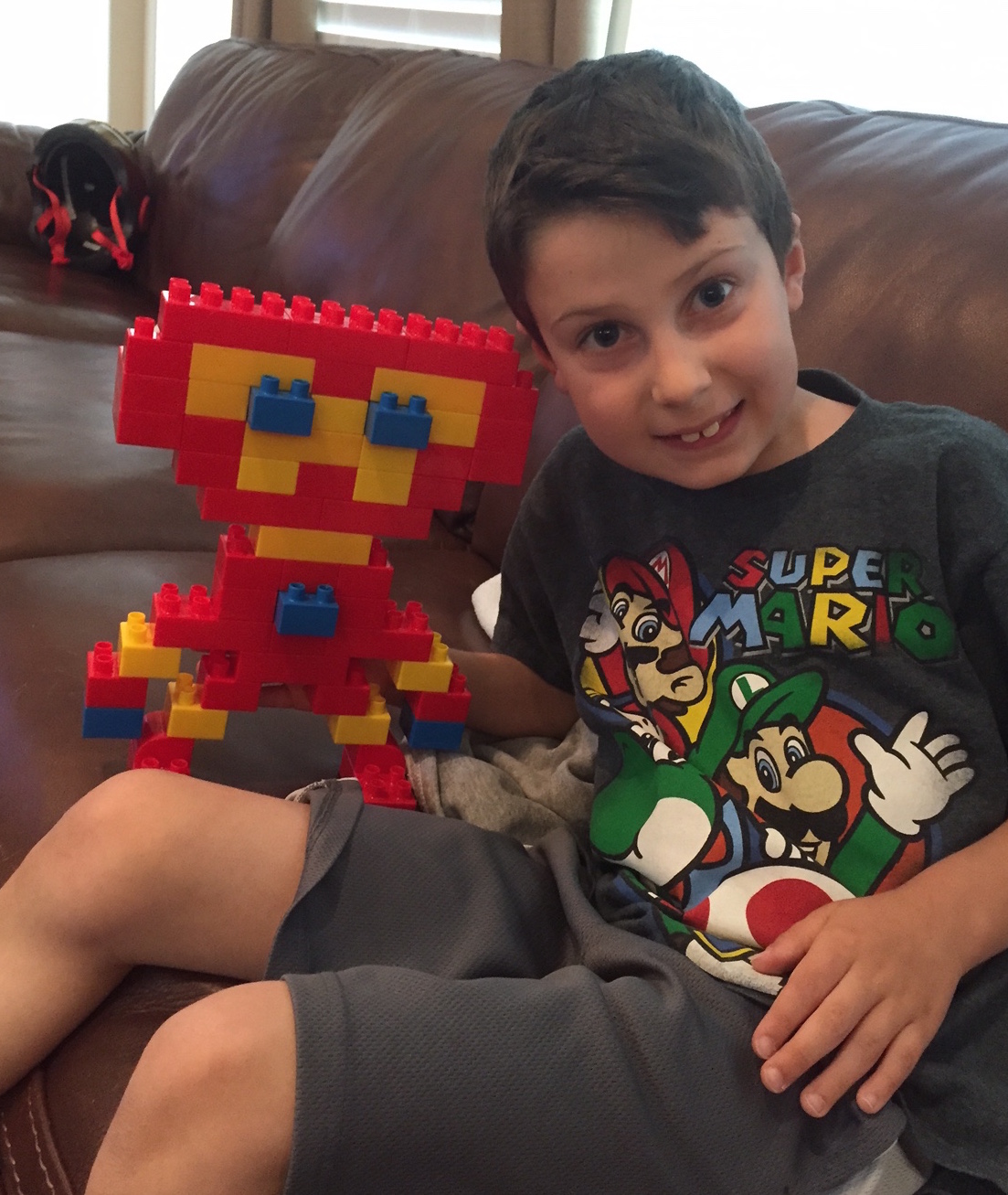
minefield of Legos (try stepping on one of those in the middle of the night!)
My son loves the idea of heroes. The good guys triumphant over bad guys. Because good always wins over evil. He aspires to save the day, both in his Xbox game and in the world around him. His imagination is vivid, all-encompassing, and beautiful. He wants to be liked, and loved for good deeds.
This daily immersion in the likes of superheroes got me thinking about the heroes in romance novels. Do the heroes in these novels want to be liked, and loved for their good deeds as well? Or are they the kind of men who merely want to live their own lives, but they’ve been thrust into a challenge they can’t avoid, and must do what they can?

At what point do little boys stop wanting to be heroes? Or does that desire fade at all? Deep down, do all men want to be that kind of superhero? Do they secretly put on their Batman capes when no one is
watching? Or listen to the Superman theme song as they drive to work. (Yes I know, I’ve mixed up Marvel heroes with DC Comics, but you get my point).


Much like William Shakespeare’s quote:

Some are born great, some achieve greatness, and some have greatness thrust upon them.

Much of the historical heroes I’ve read are those who were ‘born great,’ Lords of their family lands and leaders of armies. A few have ‘achieved greatness’ by overcoming their humble beginnings and growing into legendary soldiers. A lot of the contemporary stories I’ve read have been about those that have ‘greatness thrust upon them.’ At least, that’s what the hero in my latest novel, Jewel of Solana was like. He didn’t strive for greatness, or to be the hero. But when chaos crossed his path in the form of Princess Alanna running from evil, he did what he could to find his way back to a normal life, only to realize that life no longer existed. The damsel in distress needed help, and he accepted the challenge of being the hero to save her.

Of course, reality is never that simple, or straightforward.

Heroes lose all the time. Damsels save themselves, more often than are saved by others. Little boys grow out of their capes and Iron Man costumes. It's a sad reality. But I still think there are plenty of heroes out there, in their own small gestures. The good samaritans, the nurses, the teachers...the mothers and fathers who work tirelessly to raise the next generation of heroes.

But for now, I’ll continue to watch my boys playing the superheroes our world lacks. I like the idea of super strength, and a laser beam from my palm. :)


What kind of heroes do you like reading most? The born heroes, the ones who seek greatness,  or those that have greatness thrust upon them?

Susan Sheehey writes romantic suspense about Royals on the run, and contemporary romance. Water plays a crucial element in all of her novels, and she's a strong advocate for Autism Awareness and acceptance. Forced to give up Diet Coke, she now functions on heavy amounts of French Vanilla coffee. Susan lives and laughs in Texas with her husband and two boys. Follow her at www.SusanSheehey.com and Twitter and Facebook.

Monday, March 28, 2016

The Love and Lore of Violets

Simple violets are among the most romantic and beloved flowers. Ours will soon be in bloom. It seems a fitting time of year for an excerpt from my herbal, Plants for A Medieval Herb Garden in the British Isles.
“Who are the violets now
That strew the lap of the new-come spring?” ~ Shakespeare: Richard II
SweetViolets008
Violet (Viola Odorata). Part Used: Flowers (dried). The leaves and whole plant (fresh).
Sweet violets grow at the edge of forests and clearings and can be detected by their scent. Sometimes they appear as unwanted guests in yards and gardens, but we like violets and encourage them here. Violets have a long history reaching deep into the misty past. There are over two hundred species in the world; five are native to Great Britain. Sweet violets are usually dark purple, but may be white. The flowers are full of honey and appealing to bees, but usually bloom before bees are really out from as early as late February into April.
Viola OdorataViolets imbue liquids with their color and fragrance and make a divine perfume. A medicinal syrup of violets is given as a laxative considered mild enough for children, and for a variety of other ailments. Old herbalists recommended the syrup for ague (acute fever), inflammation of the eyes, insomnia, pleurisy, jaundice, and many other illnesses. They had great faith in its healing attributes. Among other components, violets contain salicylic acid which is used to make aspirin.
As with primroses, violets have been associated with death, particularly of the young. This is referred to by the poets, including Shakespeare in Hamlet. Ancient Britons used violet flowers as a cosmetic, and in a Celtic poem they are recommended to be employed steeped in goats’ milk to increase female beauty. In the Anglo-Saxon translation of the Herbarium of Apuleius (tenth century), the herb V. purpureum is recommended ‘for new wounds and eke for old’ and for ‘hardness of the maw.’ In Macer’s Herbal (tenth century) the Violet is among the many herbs which were considered powerful against ‘wykked sperytis.’  (A Modern Herbal)
Gar Flower Web Blue Violet
Askham’s Herbal Violet Recipe for Insomnia: “For the that may not slepe for sickness seeth this herb in water and at even let him soke well hys feete in the water to the ancles, wha he goeth to bed, bind of this herbe to his temples.”
spray of beautiful dark blue violets
To Make Syrup of Violets: Tale 1 lb. of Sweet Violet flowers freshly picked, add 2 ½ pints of boiling water, infuse these for twenty-four hours in a glazed china vessel, then pour off the liquid and strain it gently through muslin; afterwards add double its weight of the finest loaf sugar and make it into a syrup, but without letting it boil. (A Modern Herbal)
“Viola Odorata is an ancient heirloom, which the Greeks used in love potions, and beloved by our grandmothers and their grandmothers because of its sweet perfume, delicate purple to deep bluish purple flower and heart-shaped leaves.” ~ Quote from Cherry Gal, an interesting website that sells heirloom violet seeds, amongst other offerings.
violet"I know a bank, where the wild thyme blows Where ox-lips, and the nodding violet grows; Quite over-canopied with luscious woodbine, With sweet musk-roses, and with eglantine." ~ William Shakespeare
"Look at us, said the violets blooming at her feet, all last winter we slept in the seeming death but at the right time God awakened us, and here we are to comfort you." ~Edward Payson Rod
"You can't be suspicious of a tree, or accuse a bird or a squirrel of subversion or challenge the ideology of a violet." ~Hal Borland, Sundial of the Seasons, 1964
Plants For A Medieval Herb Garden in the British Isles is available in kindle and print at Amazon:
An illustrated collection of plants that could have been grown in a Medieval Herb or Physic Garden in the British Isles. The major focus of this work is England and Scotland, but also touches on Ireland and Wales. Information is given as to the historic medicinal uses of these plants and the rich lore surrounding them. Journey back to the days when herbs figured into every facet of life, offering relief from the ills of this realm and protection from evil in all its guises.

Thursday, June 4, 2015

Readers Want to Know: Much Ado About Mustangs by @JacquieRogers #romance #newrelease


Readers Want to Know...
by Jacquie Rogers

My latest book, Much Ado About Mustangs (Hearts of Owyhee #5) was released June 1, which was definitely an exciting day!    Several people have read the book already and many have read the blurb, so I asked my friends at the Pickle Barrel Bar and Books if they had any questions.  Did they ever!  

Their questions won't make much sense unless you know a little something about the book, so here's the back cover copy:

About
Secret lives, hidden dreams, and forbidden sex in the Old West—what’s a woman of nobility to do when a handsome rancher tears through her world like an Owyhee dust devil?

A British Aristocrat
Or is she? Lady Pearl Montford has performed in theatres all over the West for crowds of all sizes, but what would the world say if her secret was found out—that she's really plain old Pearl Jane Evans from Kentucky. To make matters worse, Pearl's past life as a professional trick rider is floating to the surface thanks to an unsavory suitor from her past who wants either her—or $10,000.

A Frustrated Rancher
Rugged Josh McKinnon has a ranch to build and blooded horses due in any day, but there's one problem standing between him and his dream—Lady Montford, a high-falutin' diva actress. Wrangled into playing opposite the snooty Brit in Shakespeare's ‘Much Ado about Nothing,’ Josh has to put his ranch on hold and put up with her nonsense for two weeks. Only thing is—how can he focus on his ranch when all he can think about is the way Pearl sits a horse?

Much Ado About ... Love?
With a slew of critters causing stirs left and right, meddling family members and townsfolk playing cupid, and horse rustlers causing a ruckus, Pearl and Josh have a heck of a time keeping their minds on the play and their hands off each other. When the dust settles and the curtain falls, will Pearl and Josh be able to overcome the odds working against them and find love in the wild Idaho countryside?

Those Questions
Kathleen Rice Adams: Why Shakespeare? The concept of cowboys performing Shakespeare is funny before one even starts reading the story.

Jacquie: Shakespeare’s plays were very popular in the Old West. I kept running onto newspaper articles about local theater groups performing them. Lots of folks had the plays, or at least particular roles, memorized and could perform. I’m not sure why they liked his plays so much, actually, but we still do, so I guess old Will was a pretty good writer. Modern readers aren’t enamored with his spelling and grammar, though. Several of my beta readers corrected it.

Bobbie Sue Brown: Were locals really used in traveling shows like this to play the extra parts?

Jacquie: Yes, that was very common. They didn’t have television or the internet in the 1800s, so they entertained themselves. Towns of any size at all would have a brass band or even an orchestra, a thespian club, and other means of entertainment. Silver City had a very active thespian club that was formed shortly after the camp (they never called it a town or a city) was founded. The Owyhee Avalanche tells of many entertainers who came and performed with the local group. In fact, that’s how I got the idea for this story.

Cissie Patterson: Where did the Cossack groups come from? And did they turn into circuses?

Cossack equestrian forking a horse.
Jacquie: The Cossacks (Ukrainian in Much Ado About Mustangs) were a formidable cavalry and developed the tricks used in the book for warfare. They’re not easy feats to perform standing still, and lots, lots harder on a galloping horse. Very dangerous, too. During the 1800s, equestrian shows were extremely popular and Cossack groups did come here to perform (not necessarily in Silver City or Virginia City—I fabricated all that). I could write an entire blog post on the history of trick riding, so I’ll save that for another day, but yes, all our modern equestrian tricks come from the Cossacks.

Claudia Stephan: What was the most difficult part about your research for this book? (I think the language barrier was one).

Jacquie: I don’t know Ukrainian! And they don’t use our alphabet. I never was able to get the Ukrainian words spelled out in ours, so I couldn't use a good share of the fabulous information I received.  But I did watch a bunch of YouTube videos of Cossack riders.  Incredible.  You might pick up on the fact that you can't watch videos and write at the same time, so I had to put a time limit on YouTube. 


Diane Garland: Was it common for actresses to change their names to protect their family name or so they could return to the world they knew before?

Jacquie: It was common for lots of people to change their names in the Old West. But yes, actresses seldom performed under their own names. Pearl Jane Evans didn’t take the name of Lady Pearl Montford for that reason, though. She took over for another British actress, and they created that persona for her. As now, everyone had to have a gimmick, and this one worked exceedingly well.

Cindy Jones: Without giving a spoiler or two, there were a couple of lines that just made me spew coffee laughing. For what I see as a true and beautiful romance, it's unusual. Where does that sense of humor come from?

Jacquie: I don’t know. Generally, if I try to make something funny, it isn’t. Early on, I learned that my critique partners laughed at all the wrong lines. So I gave it up and this is what happens. I get in trouble every time. LOL.

Cissie Patterson: Where do your ideas about all the critters come from? Are you an animal lover at heart?

Jacquie: I grew up on a dairy farm—we had animals everywhere, all the time. Come to think of it, I’ve never put a dairy cow in any of my books. We also had horses, lots of dogs, a zillion cats, chickens, and occasionally pigs. We never did have any mules, donkeys, goats, or sheep. The animal characters in my books have their own personalities. I’ve heard authors claim that animals are a good way to show the hero’s character, but my animals are characters in their own right, and they’re there because they show up—so I have to do something with them.

Richard Freel Sr: Why not Appaloosa, greatest horse in the west? Understand it was because Cossacks group, just saying.

Jacquie: Friesians were considered top of the line for showy horses. Appaloosas weren’t considered an official breed until the 1930s. In fact, I put an appaloosa in one of my stories but all the beta readers thought it should be capitalized—it shouldn’t. But I didn’t want anyone to think my editor didn’t do a good job, so I changed the horse to chestnut. So it goes. I love appies. Or Appies.

Other Hearts of Owyhee books