Showing posts with label Debbie Macomber. Show all posts

Monday, June 3, 2024

BOOKS OR MOVIES?

 By Caroline Clemmons

Obviously, I love reading, especially romance. If the romance includes mystery or suspense, even better. But I also love movies, especially when I can enjoy them in my own home. When my eyes are too tired to focus or my mind and body too tired to concentrate, a good movie on TV is relaxing. Like a mini-vacation for the mind.


When a movie is a depiction of a favorite book, I have mixed emotions. With a book, the author’s descriptions create images of characters in my head. If the book is engrossing, I know who these characters are, how they dress, even how they walk. The reader is privileged to characters’ internal dialogue as well as vivid descriptions. Of course, a movie doesn’t need setting descriptions, but I miss the author’s version. 

One example of excellent description that comes to mind is Loretta Chase’s LORD PERFECT. When the main characters first see one another, Ms Chase has what I think is the most enchanting reactions recorded in any book I’ve read. It's too long to include here. My favorite is this part of the hero’s reaction to the heroine’s astonishing beauty and presence: “She is a woman who causes accidents merely by crossing the street.”


Depicting books like Nora Roberts’ or Debbie Macomber’s as a screenplay usually results in an engrossing movie. I love Ms Macomber’s Mrs. Miracle movies. (Say that fast three times.) For me, though, the movie often doesn’t quite live up to the book. For instance, one of my favorite books by Nora Roberts is MONTANA SKY. That book scared me in many places and kept me turning the pages hurriedly to learn about the sisters. In the movie, some of the edginess disappeared. Oh, the movie was great, but the book is much better.

For long, involved books like LES MISERABLES or EYE OF THE NEEDLE, only portions appear in the movie. I enjoyed “Les Miserables.” Hugh Jackman! Oh, I mean the movie inspired me. Each of the actors performed superbly.

Ken Follett’s EYE OF THE NEEDLE is one complicated book, as is each of his fascinating works. The movie depicted only the last few chapters of the protagonist’s journey and the heroine’s courageous actions. Again, I enjoyed the movie, but it paled in comparison to the book. Ken Follett is a gifted author and I am in awe of his ability. 

Every author hopes one day his or her book or books will be adapted into a movie. I was excited for Lori Wilde, a friend and local author whose books I enjoy, when one of her books became a movie. Now she's had others adapted into movies. Yay, Lori!


The fact is, I enjoy reading books. I like to visualize each of the characters and the settings. Perhaps it’s because I’m old enough to have played “pretend like” as a child before watching TV or playing video games commandeered imagination. Yes, I watched TV, but the selections for kids were very limited and I had chores and homework to keep me from being glued to the set. And I read and read and read. Not great works like LES MISERABLES. Nope, but Nancy Drew and Louisa Mae Alcott launched me into other worlds.

Which do you prefer—movies, books, or both?


Friday, June 26, 2015

I Like Romance in a Community by Vonnie Davis

There seems to be two types of romance. The singular type that features mainly the heroine and hero and a friend or three, perhaps a parent. Then there are communities to which the couple belong--small towns, bike clubs, a large group of friends, workplace environment or a church. I tend to enjoy these types more.

I think families, folks we hang out with or groups to which we belong tell stories about us and also our characters. We include people who are wise, concerned about their place in society and warm-hearted souls. Kinda like...well...unlike the group shown here.


I enjoy hearing a little of everyone's story. Maybe because I spend so much time alone writing or maybe because I love watching people...and reading about them too (that's polite speak for nosy). Debbie Macomber writes some great community-type romances. So does Robyn Carr. You don't mind when they take you away from the romantic couple because you get an insight into others' lives and what they add to the dynamics of the story or series.

Take my Effie in my Highlander's Beloved Series, for instance. She's an over-protective grandma, a survivor of Woodstock, a flirt. a lover of pink and a real pip.


She plays a major role in all three of the books. Here's the beginning of chapter one of book one, A Highlander's Obsession:

Paisley Munro tried to not gawk at the two broad-shouldered men in kilts as she hefted her suitcase off the luggage carousel in the Inverness Airport, located northeast of the city referred to as the capitol of the Scottish Highlands. Her grandmother, on the other hand, was all eyes.

“Before we leave this country, I’m finding out what they wear under those kilts, even if I have to hike one up and take a gander myself.” Her grandmother patted her curls. She’d dyed her hair dark red for the trip. Unfortunately, the inability of her white hair to absorb the dye’s full effect resulted in a halo of pink curls. The combination of her tresses and her pink pantsuit made her look like the Pink Panther with wrinkles, just as skinny and wiry but without the tail.

“Behave yourself, Gram.” Paisley tugged her grandmother’s luggage off the slowly moving belt that squeaked with every couple inches gained. No use telling the free spirit to act her age. At seventy-four, why should she start now? “Our ride ought to be here somewhere.”

Paisley glanced around for Fiona Matheson, who should be holding a sign for Matheson Lodge. Fiona had promised in her reservation confirmation e-mail she’d meet them.  

Gram elbowed her. “Good grief, they’re coming toward us. Look at those broad shoulders and hairy legs. I’m not drooling, am I?” She pulled her shoulders back and thrust out her chest. She lowered her chin to talk to her breasts. “Look perky, girls. Sexy hunks at two o’clock.”

A Highlander's Obsession: A Highlander's Beloved Novel
by Vonnie Davis
Link: http://amzn.com/B00ILX9WC0

A Highlander's Passion: A Highlander's Beloved Novel
by Vonnie Davis
Link: http://amzn.com/B00N6PD78S

Bearing It All: A Highlander's Beloved Novel (releasing October 27th)
by Vonnie Davis
Link: http://amzn.com/B00TCI2A5E

Wednesday, April 2, 2014

CRAZY LIFE OF A MOSTLY SANE WRITER

By Caroline Clemmons

Non-writer friends often ask me how I think up all the stuff in my books. I wish I knew a clever comeback. My friend Bobby Terry tells people she gets her ideas from a small factory in Ohio. What really happens is our crazy brains conjure all these characters and situations. That doesn’t mean it’s easy. And we’re not really insane, either. Well, most of us aren’t. I’m not naming names, but there are a few people on my Probably Certifiable List.

And there are those (lazy?) people who say, “I’ll feed you ideas, you write the book, and we’ll split the royalties.” Uh, no. Not happening. Ever. The idea is the easy part. In fact, I have more than I can list. Writing a cohesive book with a credible story line is the hard part.

I’m fortunate enough to have three great critique partners who help me plot my books and who are members of this blog: Geri Foster, Brenda Daniels, and Carra Copelin. Sometimes Hero helps me over a sticky plot problem. I can plot by myself, of course, but an exchange of ideas spurs creativity. Even if I don’t like their suggestions, hearing them helps me formulate my own. And if I lose my way writing, they help steer me back on course. (Plan to join Geri Foster and me for our BAD BOYS AND COWBOYS Facebook Launch Party on April 18th.) 


Then comes the hard part. Some parts of writing become easier with each book. One part that does not is making basic plots fresh, giving a tried and true idea a new twist. People argue over how many basic plots there are. The number varies from nine to twenty-seven. Supposedly, any book is a variation of one of those few basic plots. And the more books an author has written, the harder that new variation becomes. Yeah, bummer.

How to make feisty, spunky heroines differ from those in past books? How different is one handsome cowboy from another?  How many ways can Tab A insert into Slot B? You get the idea, right?

Hero and I used to joke about a favorite author who repeated her basic plots. We would say, “This one is plot A.” Or plot B. She only had two. The city and names varied, but little else. At the time, we had no notion of the difficulty of a fresh plot. And, hey, she sold a gazillion books and is still even though she’s passed away.

The main problem I encounter is that life keeps slapping me upside the head. Literally, if you count the fall I had last August. You know the usual: dental appointments, doctor visits (or your prescriptions won’t be refilled), and all the errands and social stuff necessary to function. Plus, we’re still recovering from our move, the deaths of friends and family members, and all the other stuff that hinders everyone everywhere.

Many people think that if you work from home, you can stop and do this or that because, after all, you don’t have a “real” job. Sigh. This is why Debbie Macomber has an office away from her home, by the way. If we stop writing, we lose our concentration, our “groove”, and have to reread the last portion we wrote to get back into the zone. Fortunately, Hero understands this. Full time authors have to set goals in order to stay on target and publish frequently enough to stay in readers' minds.

I try to vary settings and events so that my books appear fresh, even though they are always in my style and voice. Whether contemporary or historical, with the exception of one novella set in Georgia, they’re always set primarily in Texas. They’re the same, but different. Each main character has a journey, both external and internal. The same, but different.

So, now that I’ve finished GABE KINCAID (which will launch April 18th please remember) and it’s off to my editor, I’m taking a few days off to clean house. Yeah, it’s way past time—even the dust bunnies are writing “help me” on the furniture. While I clean, I’m mulling over my next book or two.  


I’m sure you’ve heard that writers are either writing or thinking about writing. It’s true. We can’t help ourselves. For the next few days, I’ll be thinking about writing. And cleaning. Ah-choo.  

P.S. Did you see Geri Foster's and my ad in InD'Tale E-zine? The e-zine is free. We're on page 37 of the April issue. 
Subscribe to my newsletter here

Friday, August 2, 2013

BOOKS OR MOVIES - WHICH DO YOU PREFER?

By Caroline Clemmons

Obviously, I love reading, especially romance. If the romance includes mystery or suspense, even better. But I also love movies, especially when I can enjoy them in my own home. When my eyes are too tired to focus or my mind and body too tired to concentrate, a good movie on TV or Netflix is relaxing. Like a mini-vacation for the brain.

Isn't this a great cover?

When a movie is a depiction of a favorite book, I have mixed emotions. With a book, the author’s descriptions create images of characters in my head. If the book is engrossing, I know who these characters are, how they dress, even how they walk. The reader is privileged to characters’ internal dialogue as well as vivid descriptions. Of course, a movie doesn’t need setting descriptions, but I miss the author’s version. One that comes to mind is Loretta Chase’s LORD PERFEC T.  When the main characters first see one another, Ms Chase has what I think is the most enchanting reactions recorded in any book I’ve read. My favorite is the hero’s thoughts about the heroine’s astonishing beauty and presence : “She is a woman who causes accidents merely by crossing the street.”

I think this is her edgiest book. Do you?

Depicting a book like Nora Roberts’ or Debbie Macomber’s as a screenplay usually results in a very pleasant movie. I love Ms Macomber’s Mrs. Miracle movies. Say that fast three times. For me, though, the movie doesn’t quite live up to the book. For instance, one of my favorite books by Nora Roberts is MONTANA SKY. That book scared me in many places and kept me turning the pages hurriedly to learn about the sisters. In the movie, some of the edginess disappeared. Oh, the movie was satisfying, but the book much better.

Hugh Jackman! Need I say more?


For long, involved books like Victor Hugo's LES MISERABLES or Ken Follett's EYE OF THE NEEDLE, only portions appear in the movie. Of course I enjoyed “Les Miserable.” Hugh Jackman! Oh, I mean, the movie inspired me. Hugh Jackman! Um, each of the actors performed superbly.


A frightening book with perfect tension!

EYE OF THE NEEDLE is one complicated book, as are each of his tomes. This is not a book you read in one sitting. The movie depicted only the last few chapters of the protagonist’s journey and the heroine’s courageous actions. I enjoyed the movie, but it paled in comparison to the book. Ken Follett is a gifted author and I am in awe of his ability.  

Every author hopes one day his or her books or book will be adapted into a movie. The fact is, though, that I enjoy reading books. I like to visualize each of the characters and the settings. Perhaps it’s because I’m old enough to have played “pretend like” as a child before watching TV or playing video games commandeered imagination. Yes, I watched TV, but the selections for kids were very limited and I had chores and homework to keep me from being glued to the set. And I read and read and read. 

Not great works like LES MISERABLES, no. But Nancy Drew and Louisa Mae Alcott launched me into other worlds and made me a lifetime reader. I had no knowledge of the "write for hire" process or that Mildred Wirt Benson was Carolyn Keene for most of the Nancy Drew books.  Those authors created my desire to grow up and write like Carolyn Keene and Louisa Mae Alcott. I'm still trying. 

Which do you prefer—movies, books, or both? What are your favorites of each?


Monday, July 22, 2013

THE POWER OF BOOKS

by Tessa Gray

“The unexamined life is not worth living.” Although there’s some debate as to who said this (Socrates or Thoreau), this quote remains one of my all-time favorites. I firmly believe that most individuals continuously re-examine their lives, and books play an important role in reshaping us. And to take this a step further, I propose that well-written books sometimes change the course of our lives.


When I was around seven years old, I detested fairy tales. That intense dislike probably stemmed from a troubled childhood. Shifted between foster homes more often than I care to admit, I had little time for make believe stories; I was far too busy trying to figure out real life. I learned early on that nothing comes easily. For that reason, I fell in love with author Laura Ingalls Wilder’s Little House on the Prairie books. 

For those of you who’ve read the Little House on the Prairie series, you know that those frigid winter settings Wilder paints strike a chord, particularly if you’re from Minnesota, like I was. 

For the Ingalls family, life could often be brutal, and I identified with that. I found myself rooting for this tight-knit family, cheering right along with them as they struggled, rejoicing when the crops came in that year, or when Pa got a well-paying job. And, of course, there was the fact that Laura sometimes struggled in school and was far from perfect-unlike her sister, Mary.


The summer I turned nine, my situation shifted when a foster family took me in and made the decision to raise me permanently. Once the dust settled and I didn’t have to change schools every year, I began to feel like a pretty normal kid. My taste in reading shifted, and I found myself drawn to books that were somewhat lighter. 

The Trixie Belden stories by Julie Campbell became my favorites. Trixie and her sidekick, Honey, experienced adventures most girls during the 1960’s only dreamed about. Although I don’t recall many of the storylines for this series, I know that those two girls often made me laugh. Whenever we drove into our small town of Osseo, I always made a beeline to the local library to check out more Trixie Belden books. 

When those notorious Trixie Belden paper dolls came out, I was the first girl in the neighborhood to own them and quickly began creating even more Trixie Belden adventures with my Trixie and Honey paper dolls.  
                                                                                                  

Eventually, of course, I moved on to romance novels. Truth be told, I’d never been exposed to a romance novel since no one in my very conservative, religious family ever owned one. But one hot summer day, all that changed. I’d just graduated from high school and was working at a Target store when one of the employees (who just so happened to also be a classmate of mine) introduced me to a novel called Valley of the Dolls by Jacqueline Susann. We were breaking for lunch when Sheryl reached into her purse, handing me the novel she’d kept hidden from everyone. It took me most of the summer to finish the book because I didn’t have the nerve to take it home, fearful my family would catch me with it. Sheryl would fish it out of her purse when we went on break, and I’d pick up where I’d left off the previous day.

While I can’t say this is a favorite novel, for me, it represented the fact that the world could be an evil place. I realized that I was a grownup now who would be heading off to college without my foster parents to shelter me from the evils of the world, and frankly, I was scared.

I don’t know if any of you have ever been influenced by a novel you didn’t particularly like, but I was profoundly affected by this one. My biological family, unlike the foster family I lived with, was extremely dysfunctional and self-destructive, so I did understand the consequences of making bad choices. But truth be told, it was this novel about three women being led down an endless spiral of self-destruction that drove it all home-propelling me into taking charge of my life. Up until that time, I don’t know that I gave much thought to how negatively poor choices can impact a life, but after reading Valley of the Dolls, I was more determined than ever to make decisions that were wise and would lead to a happy ending.


My taste in books during college probably most closely reflects what I enjoy reading at the present time. I adore strong, compelling characters that stand up and fight for what they believe in. In To Kill a Mockingbird by Harper Lee, lawyer Atticus Finch fits the bill. 

Part of my fascination with this book stemmed from the fact I’d never been south of the Mason Dixon Line but had spent the majority of my childhood in the North. Frankly, we didn’t have any African American students in my high school, and I don’t believe I’d ever been exposed to racism. When Atticus lost the court case, I suffered right along with him, angry at the injustice of it all. But through it all I learned that although our world is far from perfect, we all play an important part in trying to create a kinder, gentler world-one which we can be proud of.

To Kill a Mockingbird  is a “must read” in many school districts, and after reading it, I began planning which books I could use in my classroom as tools for teaching some of life’s most important lessons. It truly shaped the way I teach.

It wasn’t until my own two children grew fairly self-reliant that I actually began reading novels on a regular basis. I’d finally reached a point in my life where I’d achieved many of my own personal goals and allowed myself the luxury of escaping through a good, old-fashioned romance novel. I settled on many books by writers such as Nora Roberts, Sandra Brown, and Fern Michaels, enjoying the storylines immensely.

Author Debbie Macomber wrote a book called Dakota Home and for me, that book would forever change the way I viewed characters in romance novels. In the prologue, hero Jeb McKenna loses his leg in a farming accident. After reading that short prologue, I remember leaning back in my chair, wondering how in the world this author would manage to make an actual hero out of a guy with one leg. It’s a judgmental thought, mind you, but I’m being honest here.

The book was written in 2000, before our country went to war and we learned to deal more openly with people who’d lost limbs. By the middle of this book, I’d fallen in love with this hero and spent many sleepless nights thinking about him. This book was part of my evolution and I found myself drawn to characters with angst, enormous flaws, and lots of grit. I continue to marvel at how skillfully Ms Macomber wove together this cast of characters from a small, fictitious town.

On a personal note, I’ve been fortunate enough to attend many of Ms Macomber’s book signings and at one of them, she wrote a special message to my mother-in-one. My mother-in-law shared this special inscription with many of her friends until the end of her life. How special it is when authors take that extra time to make someone happy. The characters in Debbie Macomber’s novels are kind and gracious, and I suspect they’re drawn straight from the heart.
                                                                                                                                   

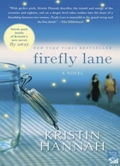
Firefly Lane by author Kristin Hannah is a beautifully written women’s fiction novel about the journey of two best friends. Like many readers who’ve reached a milestone, we often become not only reflective about our lives but begin moving away from situations and circumstances that don’t bring out the best in us. In other words, we become much more selective. It’s another part, I believe, of our complete evolution as women.

Ms. Hannah’s lush descriptions of the Pacific Northwest with settings so real you can actually feel the ocean waves wash over your legs are a huge draw for readers; coupled with the fact that her characters are flawed, gritty, and often full of angst. 

The most surprising thing about this novel is that one friend disapproves of the other’s choice in men, and yet, the women learn to live with it. Many friendships have broken up over this, but not the deep and abiding friendship between Kate Mularkey and Tully Hart. It’s a great summer read that I highly recommend.         
                                                                                                              
The cast of characters writers create often greatly impacts us. I attended a writing workshop sponsored by the school district I taught in a number of years ago. We sat in groups, reading the poem Sympathy by Paul Laurence Dunbar. One of the teachers became very emotional when we got to the part about the bird beating its wings against a cage, longing for freedom. Suddenly, her eyes welled up with tears as she confessed to everyone at the table that she’d been in a loveless marriage for years with a husband who controlled her every move. She announced that the poem had caused her to step back and take a hard look at her life. We shed many tears together and when all was said and done, she headed home to tell her husband that the marriage was over.

                 Sympathy – by Paul Laurence Dunbar
I know what the caged bird feels, alas!
When the sun is bright on the upland slopes;
When the wind stirs soft through the springing grass,
And the river flows like a stream of glass;
When the first bird sings and the first bud opens,
And the faint perfume from its chalice steals--
I know what the caged bird feels!

I know why the caged bird beats his wing
Till its blood is red on the cruel bars;
For he must fly back to his perch and cling
When he fain would be on the bough a-swing;
And a pain still throbs in the old, old scars
And they pulse again with a keener sting--
I know why he beats his wing!

I know why the caged bird sings, ah me,
When his wing is bruised and his bosom sore--
When he beats his bars and he would be free;
It is not a carol of joy or glee,
But a prayer that he sends from his heart's deep core,
But a plea, that upward to Heaven he flings--
I know why the caged bird sings!
I often find myself wondering if the author of this beautiful poem had any idea how impactful his writing truly was. It’s mind-boggling that the power of words can impact a life so profoundly as it did this woman’s. In the grand scheme of things, I suspect that’s all we really want as readers-to find our true, authentic self through the writings of others. I suspect as most of you read, your own life stories have a great deal to do with the books you choose to read. Read what you enjoy, read what helps you become the very best person you can be, and above all else, share with everyone you know the impact a book has had on your life.hlse again with a keener sting— he beats his wing!
 
Author Tessa Gray

If there’s such a thing as reincarnation, Tessa Gray plans to live her second life in the tiny, west Texas town of Alpine, getting to know the locals. After attending the Cowboy Poetry Gathering in Alpine, she’s chosen this location for her “Dreamcatcher” series. The first book in this series, LAST CHANCE TEXAS, was released in December 2012 and is available in electronic format. Having written for nearly nine years, she’s completed eleven novels. In addition to writing, Tessa spends a large chunk of her time singing and quilting. She resides on a three acre plot in Fairview with her husband of thirty-eight years, Jim, four dogs, and two miniature donkeys.

The amazon link to LAST CHANCE TEXAS is:


The amazon link to TEXAS SUNSET is:
Both books are also available in print, as well as e-book versions.

Find out more about Tessa Gray at her website:
TesssaGrayBooks (Twitter)